

Mr. Liu
Leave a message Mr. Liu
Leave a message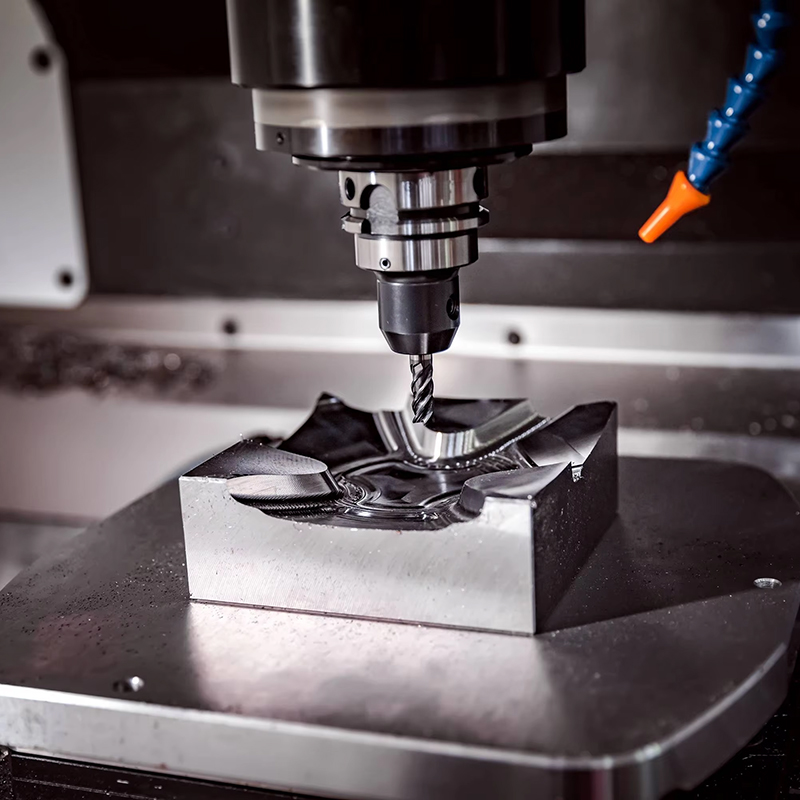
As the manufacturing industry accelerates its transformation toward high precision, high efficiency, and intelligent operations, CNC (Computer Numerical Control) machining services have become a key technological pillar for enhancing product quality and machining precision. Whether in aerospace, medical devices, automotive electronics, or precision instruments, high-quality CNC machining services are continuously driving the upgrading of industry standards. This article will provide an in-depth analysis of the core advantages of CNC machining services in improving product quality and precision from three perspectives.
一、The Advantages of CNC Machining Services in Enhancing Product Quality
In modern manufacturing, product quality directly impacts safety, durability, and market competitiveness. Leveraging automation, digitalization, and high repeatability, CNC machining services have become a core means of ensuring quality.
First, CNC replaces traditional machining—which relies on manual expertise—with programmatic control. All toolpaths and parameters (such as spindle speed, feed rate, and cutting depth) are preset by CAM software and executed with precision, significantly reducing human error. This ensures high consistency in dimensions, geometric tolerances, and surface quality across batch production, making it particularly suitable for sectors with stringent stability requirements, such as medical devices, automotive, and aerospace.
Second, modern CNC systems offer exceptional material adaptability. Whether it is aluminum alloys, stainless steel, titanium alloys, engineering plastics, or high-temperature alloys, precision machining can be achieved by optimizing cutting tools, cooling, and cutting parameters. For example, in metal milling services, 7075-T6 aerospace aluminum can be machined using high-speed milling to preserve its mechanical properties; when CNC Turning medical-grade 316L stainless steel, micron-level feed rates combined with specialized cutting tools can achieve a mirror-like surface finish of Ra ≤ 0.4 μm, meeting biocompatibility requirements.
Furthermore, CNC enables the integrated machining of complex structures. Multi-axis machines (such as five-axis milling or turn-mill centers) can complete the machining of features like holes, slots, and curved surfaces in a single setup, eliminating assembly errors and stress concentrations caused by traditional segmented manufacturing and enhancing structural integrity—for example, the internal flow channels and external mounting surfaces of a hydraulic valve body can be machined in a single operation, eliminating the risk of leakage.
Moreover, CNC machining offers full process traceability. Data such as programs, machine status, and tool life can be integrated into MES or SPC systems to enable closed-loop quality management. This not only ensures the production of high-quality products but also provides evidence of why they are high-quality, meeting industry certification requirements such as ISO 9001, AS9100, and ISO 13485.
二、Improving Machining Precision Through CNC Machining Services
Precision is a core metric in high-end manufacturing, particularly in sectors such as aerospace, medical devices, semiconductors, and precision molds, where part tolerances often need to be controlled at the micron or even sub-micron level. High Precision CNC Milling and 5-Axis CNC Milling, with their superior motion control and complex surface machining capabilities, are key to achieving ultra-high precision. Traditional 3-axis machining requires multiple setups, which can easily introduce cumulative errors; in contrast, 5-axis machines can simultaneously control the three linear axes (X, Y, Z) and the two rotary axes (A/B) in a single setup, enabling omnidirectional cutting. This makes them particularly suitable for parts with free-form surfaces or deep cavities, such as impellers, turbine blades, and medical implants, achieving stable machining accuracy of ±0.005 mm, with high-end equipment capable of reaching ±0.001 mm.
Modern high-precision CNC systems also integrate multiple core technologies: high-rigidity spindles and thermal deformation compensation reduce vibration and thermal drift; closed-loop feedback (such as linear encoders) corrects positional deviations in real time; and intelligent algorithms dynamically adjust parameters based on tool wear, material properties, or temperature changes to ensure consistency. In the field of turning, Precision CNC Turning Services also achieves high roundness (<0.001 mm), concentricity (≤0.002 mm), and ultra-low surface roughness (Ra ≤ 0.2 μm), meeting the stringent requirements of hydraulic valve spools, optical barrels, and other components.
Using advanced CAM software such as Mastercam and Siemens NX, engineers can simulate machining paths virtually to proactively avoid interference risks and optimize toolpaths. This “digital twin + high-precision equipment” model ensures that CNC machining is not only ‘accurate’ but also “stable and fast.”
三、Quality Assurance System for CNC Machining Services
High-quality CNC machining services go beyond mere equipment operation; they encompass a comprehensive quality control system that spans the entire process, from order receipt to delivery, with rigorous checks at every stage to ensure quality.
- Pre-production process review to mitigate machining risks. Upon order receipt, we conduct a specialized review of the workpiece drawings, materials, and precision requirements. We optimize machining processes, select appropriate cutting tools and equipment, and develop a customized machining plan. This allows us to anticipate and resolve potential quality and precision issues in advance, thereby avoiding rework and associated losses.
- Real-time process monitoring ensures stable machining. Dedicated personnel conduct inspections during the machining process, working in conjunction with intelligent equipment monitoring systems to track machining parameters and workpiece status in real time. Any anomalies trigger immediate machine shutdowns for adjustments, ensuring every step meets quality standards and preventing batch defects.
- Rigorous inspection and acceptance to uphold delivery standards. Upon completion of machining, high-precision equipment such as coordinate measuring machines (CMMs) and laser inspection systems is used to comprehensively inspect workpiece dimensions, geometric tolerances, and surface roughness. Products are only packaged and delivered once all specifications meet the required standards. Additionally, a comprehensive quality traceability system is established to maintain a complete audit trail, ensuring every product meets customer requirements.
四、Conclusion
As the manufacturing industry transitions toward high-end and precision production, CNC machining services have become a key factor in helping industries across the board build core competitiveness, thanks to their advantages of consistent quality, controllable precision, and flexible processes. Whether it involves milling, turning, Laser Cutting, or sheet metal forming, our professional CNC machining team leverages technical expertise and robust quality control to create high-quality, high-precision components for our clients, thereby helping “Made in China” reach new heights.


Privacy statement: Your privacy is very important to Us. Our company promises not to disclose your personal information to any external company with out your explicit permission.
Fill in more information so that we can get in touch with you faster
Privacy statement: Your privacy is very important to Us. Our company promises not to disclose your personal information to any external company with out your explicit permission.


